Why Should You Test Your Gold Jewelry for Authenticity?
You should test your gold jewelry because counterfeits are increasingly common, inherited pieces often lack documentation, and knowing authenticity affects insurance, resale value, and peace of mind. Testing before selling ensures you receive a fair price based on actual gold content.
Counterfeit gold jewelry has flooded online marketplaces over the past decade. Sophisticated fakes use tungsten cores with gold plating that looks and feels convincing. Even experienced collectors have been deceived. Testing protects you from unknowingly wearing or selling worthless metal.
Inherited or gifted jewelry presents a unique challenge. Your grandmother's ring might be 18K solid gold or gold-plated costume jewelry. Without documentation or hallmark inspection, you cannot know its true value. Testing removes the guesswork.
If you plan to sell your gold jewelry, preliminary testing at home helps you set realistic expectations. You arrive at the dealer knowing whether your piece is likely solid gold or plated. This knowledge puts you in a stronger position during the appraisal process.
What Do Gold Hallmark Stamps Mean?
Gold hallmark stamps indicate the purity of your jewelry using either the karat system or a three-digit fineness number. These tiny markings, usually found on clasps, inner bands, or behind pendants, tell you exactly how much gold your piece contains.
Solid Gold Stamps. Look for these markings that confirm real gold content: 10K or 417 means 41.7% pure gold. 14K or 585 means 58.5% pure gold. 18K or 750 means 75% pure gold. 22K or 917 means 91.7% pure gold. 24K or 999 means 99.9% pure gold. These are the stamps that indicate genuine value.
Warning Stamps. Several stamps indicate your jewelry is NOT solid gold. GP means gold-plated: a thin gold layer over base metal. GEP means gold electroplated: an even thinner gold coating applied by electric current. GF means gold-filled: a thicker gold layer bonded to base metal, typically 5% gold by weight. HGE means heavy gold electroplate.
Use a jeweler's loupe or strong magnifying glass to read these stamps. On rings, check the inner band. On necklaces and bracelets, examine the clasp area. On earrings, look at the post or back. Some older or handmade pieces may lack stamps entirely.
A missing stamp does not automatically mean the piece is fake. Antique jewelry from certain eras and regions was not required to carry purity marks. However, any modern jewelry sold as gold in Canada should have a proper hallmark stamp under Canadian precious metals marking regulations.
How to Perform the Magnet Test on Gold
The magnet test works because real gold is not magnetic. Hold a strong neodymium magnet against your jewelry. If it sticks or pulls strongly toward the magnet, the piece contains ferromagnetic metals like iron or nickel and is not solid gold.
You need a neodymium magnet for this test. Regular refrigerator magnets are too weak. Neodymium magnets are available at hardware stores and online for a few dollars. The stronger the magnet, the more reliable the test results.
Hold the magnet close to your jewelry without touching it first. Real gold will show zero attraction. Move the magnet slowly along the piece. If any section pulls toward the magnet, that area contains magnetic metal. Even a slight tug indicates the piece is not pure gold throughout.
Important Limitations. The magnet test has a significant blind spot. Many non-magnetic metals are also not gold. Copper, brass, aluminum, and lead all pass the magnet test. A fake gold piece made from copper alloy with gold plating will not stick to a magnet. Passing this test alone does not confirm authenticity.
Use the magnet test as your first screening step. It quickly identifies obvious fakes containing iron or steel. Combine it with other tests listed below for a more complete assessment of your jewelry.
How to Use the Ceramic Scratch Test
The ceramic scratch test reveals the true color of your jewelry's metal beneath any surface coating. Drag your gold piece firmly across an unglazed ceramic plate or tile. Real gold leaves a gold-colored streak. Fake gold typically leaves a black or dark-colored streak.
Find an unglazed ceramic surface for this test. The back of a porcelain tile, an unglazed ceramic plate, or a ceramic streak plate from a hobby supply store all work. The surface must be unfinished and slightly rough to produce visible marks.
Press your jewelry firmly against the ceramic and drag it across a two-inch section. Apply moderate pressure. Too little pressure leaves no mark. Too much pressure could damage delicate pieces. Examine the streak color under good lighting.
A bright gold-colored streak strongly suggests real gold. A dark gray, black, or greenish streak indicates base metal or a fake. Copper alloys often leave a distinctive reddish-brown streak. Brass leaves a yellowish but distinctly different mark than real gold.
Caution: This test scratches your jewelry. Perform it on an inconspicuous area, such as the inside of a ring band or the back of a pendant. Do not scratch the visible surface of pieces you want to keep in pristine condition.
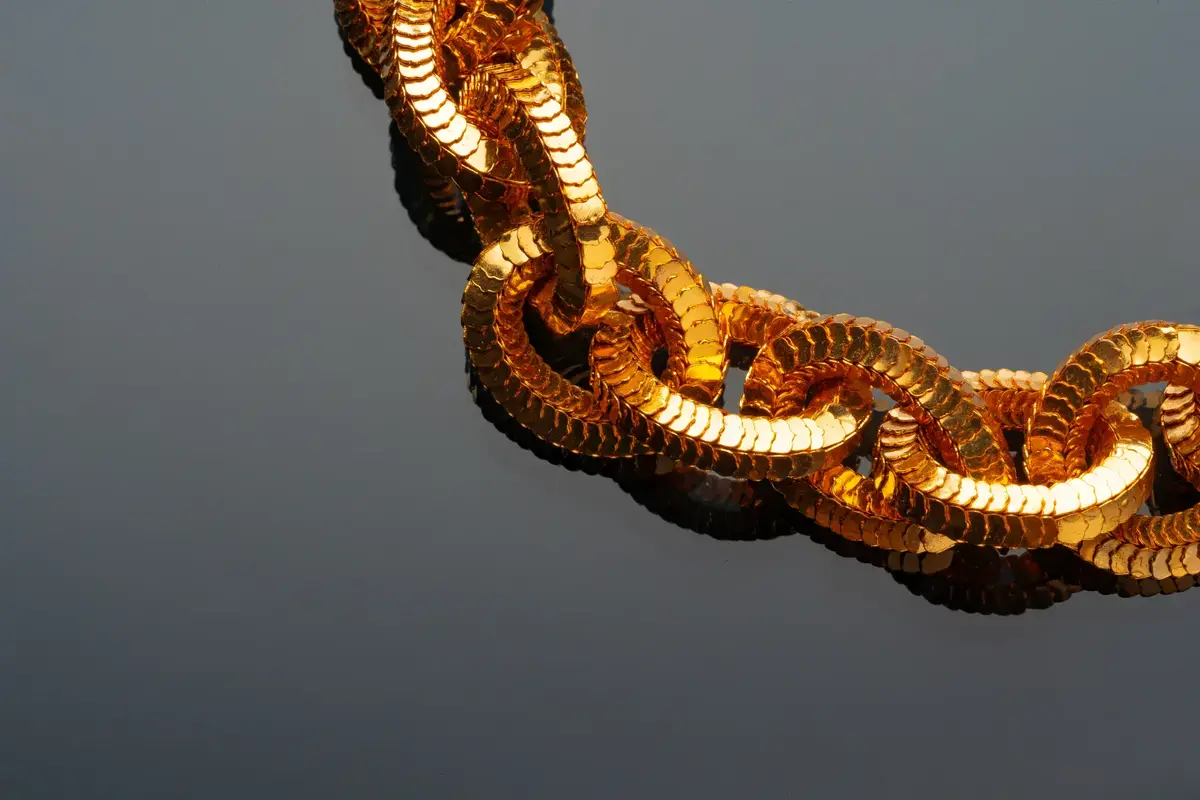
Gold hallmark stamps indicate purity. Look for karat markings on clasps, inner bands, and posts.
How to Test Gold with the Float/Water Test
The water test uses gold's high density to separate real pieces from fakes. Real gold has a density of 19.3 grams per cubic centimeter and sinks immediately to the bottom. Most base metals and plated items sink more slowly or behave differently in water.
Fill a glass or bowl with room-temperature water. Gently drop your jewelry into the water and observe how it behaves. Real gold sinks straight down and settles at the bottom without hesitation. There is no gradual descent or floating.
If your piece floats, it is definitely not solid gold. If it sinks slowly or drifts to the side, it may contain lighter base metals with a gold coating. Hollow jewelry may trap air bubbles, so tap the piece to release air before testing.
Limitations of This Test. Several heavy metals also sink quickly in water. Tungsten has a density of 19.25, nearly identical to gold. Lead sinks immediately too. A tungsten-core counterfeit will pass the water test. Use this method alongside other tests, not as your sole verification.
What Other At-Home Tests Can You Try?
Beyond the magnet, ceramic, and water tests, three additional home tests can help you assess your gold jewelry. The vinegar test, skin discoloration test, and visual inspection each provide useful clues about authenticity.
The Vinegar Test. Place a few drops of white vinegar on your jewelry and wait two to three minutes. Real gold does not react to vinegar. The surface stays the same color. Fake gold or gold-plated base metal may change color, darken, or develop a green tinge when exposed to the acetic acid in vinegar.
The Skin Discoloration Test. Wear the jewelry against your skin for several hours. Real gold does not cause skin reactions in most people. If your skin turns green, black, or develops a rash under the jewelry, the piece likely contains copper, nickel, or other base metals. Gold-plated items commonly cause discoloration as the plating wears thin.
Visual Inspection. Examine your jewelry carefully under bright light with a magnifying glass. Look for areas where plating has worn thin, revealing a different-colored metal underneath. Check edges, clasps, and high-wear areas. Real solid gold maintains consistent color throughout. Plated pieces show discoloration at wear points.
Each home test has limitations. No single test provides definitive proof. When you combine multiple tests, patterns emerge. A piece that passes all six home tests is more likely real, but certainty requires professional testing equipment.
Why Are Professional Gold Tests More Reliable?
Professional gold tests use scientific instruments that measure the actual elemental composition of your jewelry. These methods detect counterfeits that easily pass every home test. For high-value pieces, professional testing is the only way to confirm authenticity with certainty.
XRF Analysis. X-ray fluorescence is the gold standard for non-destructive testing. An XRF device fires X-rays at your jewelry and analyzes the energy signatures returned by each element present. It identifies gold, silver, copper, palladium, and any other metals within seconds. XRF determines exact purity percentages without damaging your piece.
Electronic Gold Testers. Electronic testers measure the electrical conductivity of your jewelry. Gold has a specific conductivity profile that differs from base metals. These portable devices provide quick readings and work well for standard karat gold. They are less reliable on heavily plated or alloyed pieces.
Acid Testing. Acid testing involves scratching your jewelry on a test stone and applying nitric acid or aqua regia. The acid's reaction with the metal streak reveals approximate karat purity. Acid testing is destructive to a tiny area. Professional dealers use calibrated acid solutions for each karat level.
Professional appraisal services combine multiple testing methods for maximum accuracy. An experienced appraiser examines hallmarks, performs XRF analysis, and evaluates craftsmanship. This comprehensive approach catches counterfeits that any single test might miss.
Where to Get Free Professional Gold Testing in Toronto
GoldAgo offers free professional gold testing at our Markham location with no obligation to sell. Bring your jewelry in and our certified specialists will test it using XRF technology. You receive accurate results within minutes and can decide your next steps with full knowledge of what you own.
Our free testing service covers all types of gold jewelry including rings, necklaces, bracelets, earrings, brooches, and watches. We test single pieces or entire collections. There is no minimum or maximum. Whether you bring one ring or a box of inherited jewelry, we test everything at no charge.
What to Expect During Your Visit. Walk into our storefront during business hours. No appointment is needed. Our specialist will examine your pieces visually, check hallmark stamps, and perform XRF analysis. You will see the results on screen. We explain exactly what each reading means in plain language.
If your gold tests as authentic and you choose to sell, we provide a competitive offer based on the current spot price and your item's purity. If you prefer to keep your jewelry, you leave with valuable knowledge about your pieces. Either way, the testing costs you nothing. GoldAgo has served the Greater Toronto Area since 2010 with a 4.9-star rating from over 847 reviews.