
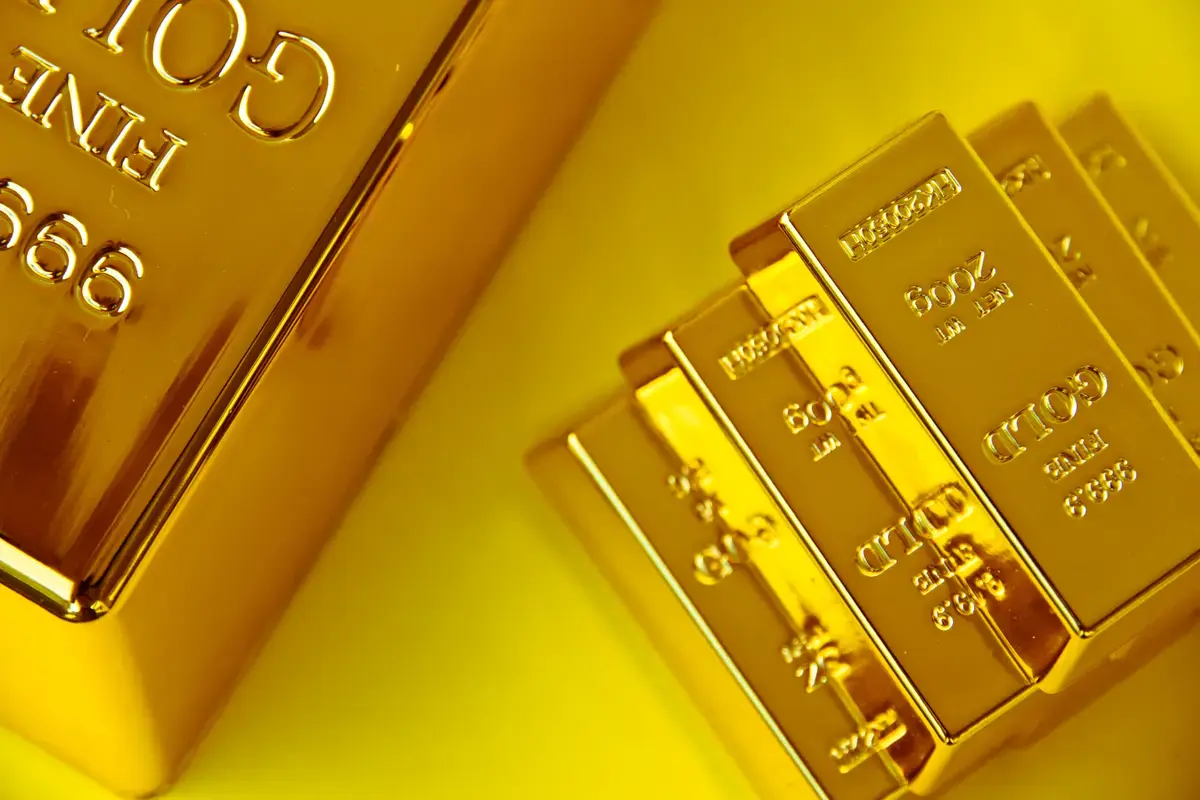
What Is the Current Gold Price Per Gram in Canada?
The current gold price per gram in Canada is determined by converting the global spot price from USD per troy ounce into CAD per gram. As of early 2026, with spot gold trading above CAD $3,800 per troy ounce, the price of one gram of pure (24K) gold sits near $122 CAD. This figure changes throughout the day as global markets fluctuate.
The spot price represents the wholesale rate for pure gold traded on international commodity exchanges. Canadian prices include two conversions: from troy ounces to grams (1 troy ounce = 31.1035 grams) and from USD to CAD at the current exchange rate. Both of these conversions affect the per-gram price you see quoted in Canada.
Keep in mind that the spot price per gram is for 99.99% pure gold. Your jewelry is almost certainly not pure gold. The actual value of your gold item depends on its karat purity, which we cover in detail in the next section. The spot price serves as the starting point for all gold valuations.
You can check the live spot price on financial websites like Kitco, Bloomberg, or the London Bullion Market Association. GoldAgo updates its gold buying rates throughout the day to reflect current market conditions. For the most accurate quote on your specific items, visit our location for a free appraisal.
How Do Gold Karats Affect Price Per Gram?
Gold karats directly determine the percentage of pure gold in your item, which is the primary factor in its per-gram value. Higher karat gold contains more pure gold and is worth more per gram. A 24K item is nearly pure gold, while a 10K item contains less than half gold by weight. Understanding karats lets you estimate your gold's value before visiting a dealer.
Here is a breakdown of common gold karats with their purity and approximate value per gram based on a spot price of CAD $122 per gram for pure gold. These are melt values before dealer margins are applied.
| Karat | Gold Purity | Melt Value / Gram (approx.) |
|---|---|---|
| 24K | 99.9% | ~$122 CAD |
| 22K | 91.7% | ~$112 CAD |
| 18K | 75.0% | ~$92 CAD |
| 14K | 58.5% | ~$71 CAD |
| 10K | 41.7% | ~$51 CAD |
Most gold jewelry sold in Canada is stamped with 10K, 14K, or 18K. The 14K standard is the most common in North American jewelry. Look for the karat stamp inside rings, on clasp tags, or on the back of pendants. Stamps may read "10K," "14K," "585" (for 14K), "750" (for 18K), or "999" (for 24K). If you cannot find a stamp, a professional dealer can test the purity at no cost.
Visit our gold jewelry buying page for current payout rates on all karat levels. GoldAgo provides free purity testing using advanced XRF technology that identifies exact gold content without damaging your items.
Why Is the Price You Get Paid Different From Spot Price?
The price a gold buyer pays you is always less than the spot price because of refining costs, testing expenses, business overhead, and profit margins. Reputable dealers typically pay between 70% and 90% of the calculated melt value. This spread is how gold buying businesses sustain their operations while still offering competitive rates to sellers.
Refining costs represent the largest deduction. Your gold jewelry must be melted, refined, and assayed before it returns to the commodity market as pure gold. Refineries charge fees for this process, and those fees are passed on to the seller indirectly through the dealer's buy price. Higher-purity items require less refining and therefore command higher payout percentages.
Testing and business costs also affect the price you receive. Dealers invest in certified scales, XRF analyzers, acid testing kits, and professional training. They pay rent, insurance, licensing fees, and staff wages. These operational costs are built into the spread between spot price and the buy price they offer. A dealer who pays too close to spot price cannot sustain their business long-term.
Here is a realistic expectation for what sellers receive. Gold bullion and bars typically earn 85-95% of spot value because they are already refined. Gold coins earn 80-90% because of their known purity and potential numismatic premium. Gold jewelry earns 70-85% because of the refining required. Scrap gold and dental gold earn 65-80% due to mixed alloys and additional processing. The volume of gold you sell also matters. Larger quantities often qualify for higher payout percentages.
How to Calculate Your Gold Jewelry's Scrap Value
You can estimate your gold jewelry's scrap value at home using a simple four-step formula. Multiply the weight in grams by the purity percentage, then by the current spot price per gram, and finally by the expected dealer payout percentage. This calculation gives you a realistic estimate of what a buyer will offer.
Step 1: Weigh your gold. Use a kitchen scale that measures in grams. Remove any non-gold components first, such as leather cords or large gemstones. The weight should reflect only the gold portion. A standard women's gold ring typically weighs 2-5 grams. A men's ring weighs 5-10 grams. A gold chain weighs 10-30 grams depending on length and thickness.
Step 2: Identify the karat. Check for a stamp on the item. Common stamps include 10K, 14K, 18K, 585, 750, or 999. Convert the karat to a decimal: 10K = 0.417, 14K = 0.585, 18K = 0.750, 22K = 0.917, 24K = 0.999. If there is no stamp, assume a lower purity and get professional testing for accuracy.
Step 3: Apply the formula. Weight (grams) x Purity (decimal) x Spot price per gram (CAD) = Melt value. For example: a 15-gram 14K gold necklace when spot gold is $122 per gram: 15 x 0.585 x $122 = $1,070.55 melt value. Step 4: Apply the dealer percentage. Multiply the melt value by 0.75 to 0.85 for a realistic estimate: $1,070.55 x 0.80 = approximately $856 CAD. For a precise assessment, visit our precious metals appraisal service for free.
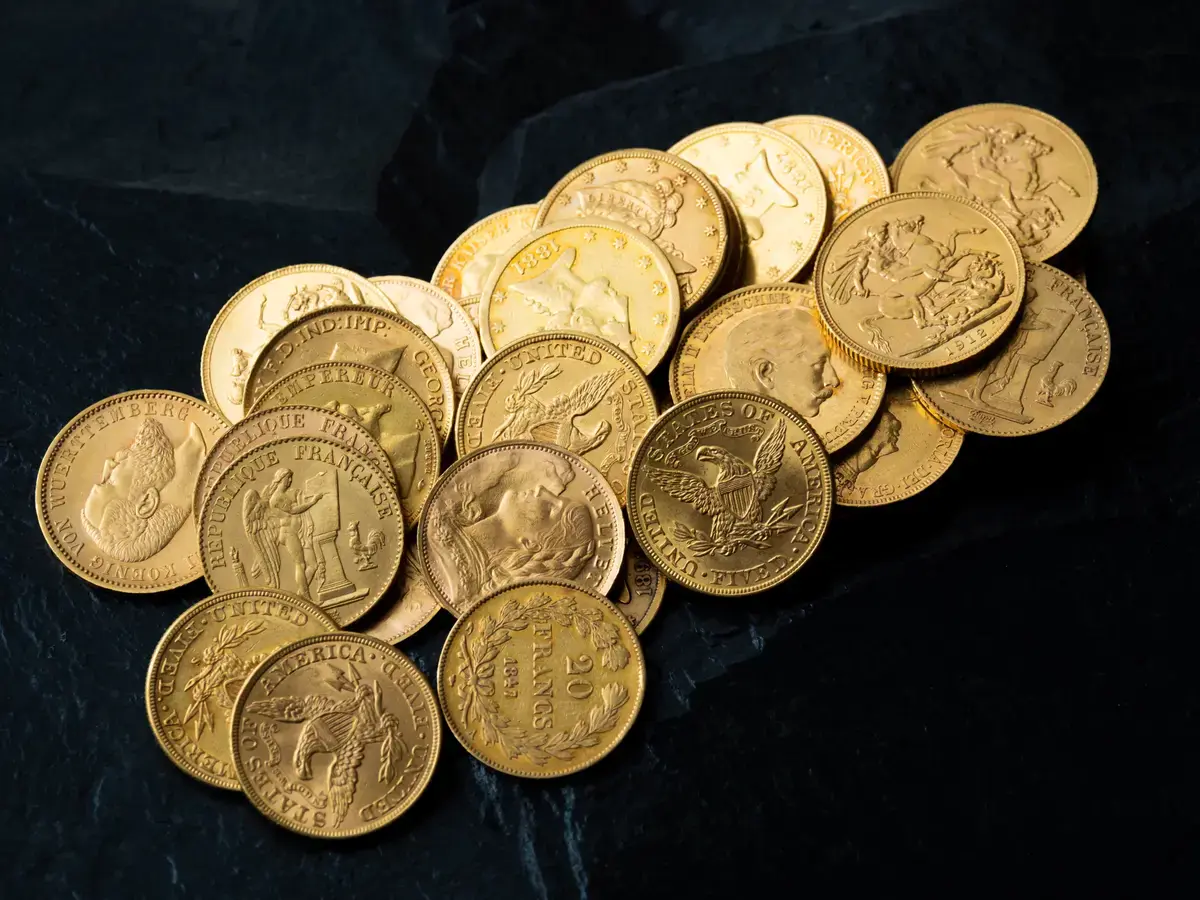
The karat purity of your gold is the primary factor in determining its value per gram.
What Factors Cause Gold Prices to Fluctuate?
Gold prices fluctuate due to inflation expectations, central bank monetary policy, geopolitical tensions, US dollar strength, and global supply and demand dynamics. These factors interact in complex ways, but understanding the basics helps you anticipate price movements. Sellers who monitor these factors can time their sales for maximum return.
Inflation is the strongest long-term driver of gold prices. When inflation rises, gold becomes more attractive as a store of value. Central banks around the world, including the Bank of Canada, set interest rates partly in response to inflation. Higher interest rates tend to suppress gold prices because bonds and savings accounts become more competitive. Lower rates tend to boost gold because the opportunity cost of holding gold decreases.
Geopolitical events cause sudden price spikes. Wars, trade conflicts, sanctions, and political instability drive investors toward gold as a safe-haven asset. The Russia-Ukraine conflict and Middle East tensions both contributed to gold's rise in 2024-2025. These events are unpredictable but consistently push gold prices higher in the short term.
The US dollar has an inverse relationship with gold prices. When the USD weakens against other currencies, gold prices in USD rise. For Canadian sellers, the CAD/USD exchange rate adds another layer. A weaker Canadian dollar means higher gold prices in CAD, even if the USD gold price stays flat. Central bank gold purchases by countries like China, India, and Turkey have also driven prices higher since 2022. These institutional buyers remove gold from the open market, reducing supply and supporting higher prices.
When Is the Best Time to Sell Gold in Toronto?
The best time to sell gold in Toronto is when the spot price is trending upward and the Canadian dollar is relatively weak against the USD. Both conditions simultaneously create the highest possible CAD gold prices. While perfect market timing is impossible, monitoring these two indicators helps you choose a favorable selling window rather than a poor one.
Seasonal patterns offer some guidance. Gold prices historically peak during periods of economic uncertainty, which often occurs in late fall and early winter. The Indian wedding season (October through January) also drives gold demand higher globally. January and February often see strong prices as central banks announce monetary policy outlooks for the year ahead.
Avoid selling during summer months if you can wait. Trading volumes typically decrease in July and August as markets enter their quietest period. Lower volumes can mean lower prices and wider spreads between buy and sell rates. September through March historically offers the strongest gold prices in CAD.
That said, trying to time the market perfectly is risky. If gold prices are near historic highs, as they are in early 2026, that alone is a strong reason to sell. Waiting for an even higher price means risking a correction. The current price environment represents one of the best selling opportunities in decades. If you need the money or want to convert unused gold into cash, today's prices are excellent by any historical measure.
How Toronto Gold Prices Compare to Other Canadian Cities
Toronto gold sellers typically receive higher payout percentages than sellers in most other Canadian cities because of strong dealer competition in the Greater Toronto Area. With dozens of licensed gold buyers competing for your business, market forces push payout rates upward. Sellers in cities with fewer buyers often receive 5-10% less for the same gold items.
Toronto and Vancouver lead the country in competitive gold buying rates. Both cities have large, diverse populations of gold sellers and numerous established dealers. The competition ensures that payout percentages stay high, typically in the 75-90% range for jewelry and 85-95% for bullion. Dealers in these cities also invest more in advanced testing equipment, leading to more accurate evaluations.
Smaller Canadian cities like Winnipeg, Saskatoon, or Halifax may have only a handful of gold buyers. With less competition, these buyers can offer lower rates without losing business to competitors. A seller in a small city might receive 60-75% of melt value for jewelry, compared to 75-85% in Toronto. The difference on a $1,000 melt-value item could be $100 to $150.
This price advantage is why some sellers from surrounding areas travel to Toronto or the GTA to sell their gold. The higher payout often justifies the trip, especially for larger collections. GoldAgo, located at 7800 Woodbine Ave in Markham, serves clients from across the Greater Toronto Area and beyond. Our location offers easy access from the 404 and 407 highways, making it convenient for sellers from across Ontario.